

The Ritual Flywheel
Week Six and the power of "repeated beingness"

A little over a month ago, I asked you to pay attention to the small, repeated actions in your day—the ones you might be rushing past without noticing. Since then, we’ve explored what makes a ritual a ritual, how our bodies can lead the way, how movement and rest and creative practice and moments of stillness can all become meaningful anchors.
Now it’s time to put it all together and to understand why any of this works in the first place!
“Repeated Beingness”
I’ve come to believe that the power of ritual isn’t about discipline or productivity or even wellness . . . it’s about becoming. I love this quote from James Clear, author of Atomic Habits, which is a book about habits, yes, but I think this idea points toward something far more magical than just habit-building.
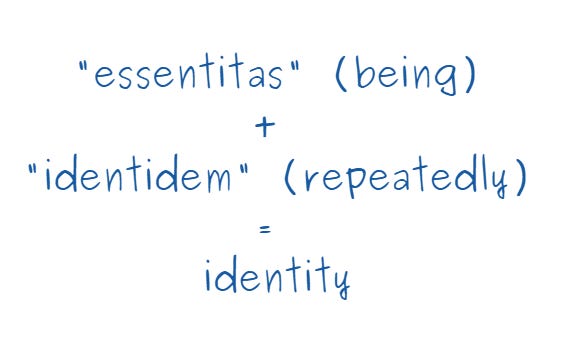
“The more you repeat a behavior, the more you reinforce the identity associated with that behavior. In fact, the word identity was originally derived from the Latin words essentitas, which means being, and identidem, which means repeatedly. Your identity is literally your ‘repeated beingness.’”
Rituals remind us, through their very persistence, that we’ve weathered countless challenges before and can do so again—whether facing life’s great trials or simply navigating the swirling chaos of an ordinary Tuesday. But beyond stress relief and resilience, rituals, especially practiced daily, are quiet architects of who we can become. They help us establish and refine our desired “beingness,” leading to a life of fullness and meaning. While this may sound like New Age mumbo jumbo, it’s the practical wisdom of ancient traditions validated by modern science.
Two thousand five hundred years ago, when Confucianism emerged in China, the concept of wu-wei began to take shape. Often translated as “no trying,” it’s perhaps better understood as a state of graceful alignment with the world—where actions feel natural and spontaneous, without force or conscious effort. Edward Slingerland, a professor at the University of British Columbia, describes wu-wei in his book Trying Not to Try as acting skillfully and effectively not through deliberate overthinking, but by being naturally attuned to the moment.
Reaching this state paradoxically requires structure first. In Confucian thought, ritual was the bridge—marrying body and mind, action and intention. Through dedicated practice, ritual becomes the vehicle to effortless being. As Slingerland explains, “You choose a desirable model, then reshape your hot cognition to fit by immersing yourself in reminders and environmental cues. How this repetition eventually causes the new internal disposition to become sincere and self-activating is a bit of a mystery—but it seems to work in practice.”
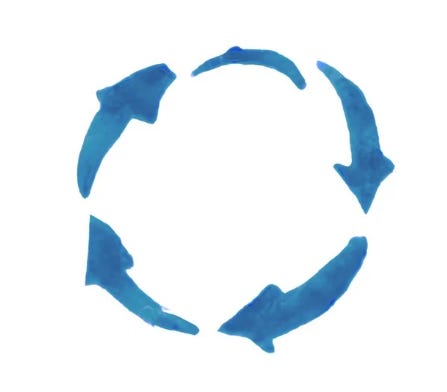
This is what I call the ritual flywheel. Each time you light the candle, say the blessing, or pause to truly listen to or notice the world around you, you give momentum to the identity you’re building. Each action is another turn of the wheel, moving you closer to effortless embodiment of your truest self.
Yes, there will be days when your practice feels hollow or mechanical, when you question whether you’re simply going through the motions. I’ve been there myself, and I can assure you that these feelings are a normal part of the process. During these times, it’s crucial to persist. If you’ve chosen a ritual that resonates with your highest self and practice it consistently—dare I say, “religiously”—you’ll begin to notice subtle yet profound changes.
The magic that unfolds isn’t mystical; it’s the result of neuroplasticity and habit formation. Your brain adapts to repeated behaviors, making them feel more natural over time. This transformation might manifest as increased self-awareness, improved emotional regulation, or a stronger sense of purpose. Keep showing up for your ritual, even when progress feels slow or imperceptible. The cumulative effect of your daily practice will gradually reshape your thoughts, behaviors, and ultimately, your life!
Why this matters now
We are living through a strange and unsettling moment. Many of the people in the highest positions of power appear to be operating without a clear moral compass. Promises are broken casually, norms are discarded, humans are not afforded their dignity. It can feel destabilizing in a way that’s hard to name—not just politically, but personally. When the world around us seems unmoored from values, it becomes harder to hold onto our own.
This is exactly why knowing what you stand for matters so much. Not in a bumper-sticker way—but in the deep, embodied sense that wisdom traditions have long understood: values that live in your bones, not just in your head.
The ritual flywheel only works when it’s turning toward something. That something is your values. They are the north star of your ritual practice and the reason your daily actions add up to more than habit. Without them, ritual is just routine. With them, it can become an exercise in integrity . . . a daily, quiet act of being the person you want to be, regardless of what’s happening in the world around you.
Putting it all together
Over the past five weeks, you’ve explored anchoring rituals, moments of attention and intention, the role of creativity, and more. Now is the time to weave these threads together and codify your personalized daily practice.
Pull out your weekly worksheets. Highlight what you’ve consistently returned to and notice any recurring themes. Look for the activities that sparked genuine resonance and joy. Then ask yourself: how are my core values represented here? Is this practice sustainable, or does it feel like one more burden? Does it connect me to something larger than my to-do list?
If something doesn’t fit your daily life quite yet, don’t discard it. Consider it a leftover that perhaps you could make use of on a monthly or seasonal basis. Trust the process— each morning you rise walk the dog, each meal enjoyed with presence, each moment of conscious breathing is another turn of the flywheel. Each small act of living your values, especially when no one is watching, is you becoming who you are meant to be.

That is the magic of ritual! Not a way to fix yourself, but a way to remember yourself . . . again and again, until it becomes effortless . . . until living your values is simply who you are.
Thank you for walking this path with me over these past six weeks and I’d love to hear about your experiments in ritual design! Until then, here’s to living a life of meaning, one day at a time.
The flywheel metaphor works structurally and conceptually, reinforcing the cumulative force of small acts aligned with values