

Know Thyself
Week Two and shaping a life from the inside out

“My highest ambition is to be who I already am.”
— Thomas Merton
Merton’s words capture the beautiful paradox at the heart of this week’s work: discovering what already exists within us.
As we focus on self-discovery and finding the why of your ritual practice, keep your ritual inventory from Week One close at hand. Continue tracking your daily activities, noting which ones truly resonate. For now, consider setting aside actions with a Ritual Potential Score below three, or give them another week to reveal their significance. Don’t permanently delete anything, though—what feels insignificant today might become a meaningful ritual component later on.
During my executive coach training with the Co-Active Training Institute (CTI), we embraced a powerful principle: all people are naturally creative, resourceful, and whole. This means we are all capable and complete, exactly as we are. But excavating who you are is an ongoing journey—so where do you start?
There are many paths to self-discovery—personality assessments like Myers-Briggs (MBTI), the Enneagram, and others. If this is something you already have a handle on, fantastic! If you’re new to this work, I’ve included some exercises below.
Before we dive into the exercises, it’s worth pausing on the idea of self—because this week’s work asks you to listen beneath habit, expectation, and ego.
The concept of self is a tricky one. It’s hard to argue that it’s fixed, given how continually we evolve. The person you are today may look very different from who you were years ago—or even from who you were earlier this morning. Within a single day, multiple versions of ourselves emerge: the frustrated driver in traffic, the focused professional at work, the gentle presence at night.
I’ve learned a great deal about this fluid nature of identity through my work with Brian Lowery, a professor at Stanford’s Graduate School of Business and the author of Selfless. As Brian explains, “The idea that there is one true self is nonsense—but useful nonsense.” While we may not have a single, unchanging self, the act of trying to understand ourselves gives our lives coherence and meaning.
He offers a metaphor I love: the self is like the shape a flock of birds makes when they fly. The pattern is recognizable, even though it’s constantly shifting. Birds may join or leave, but the flock remains—always changing, yet still identifiable.
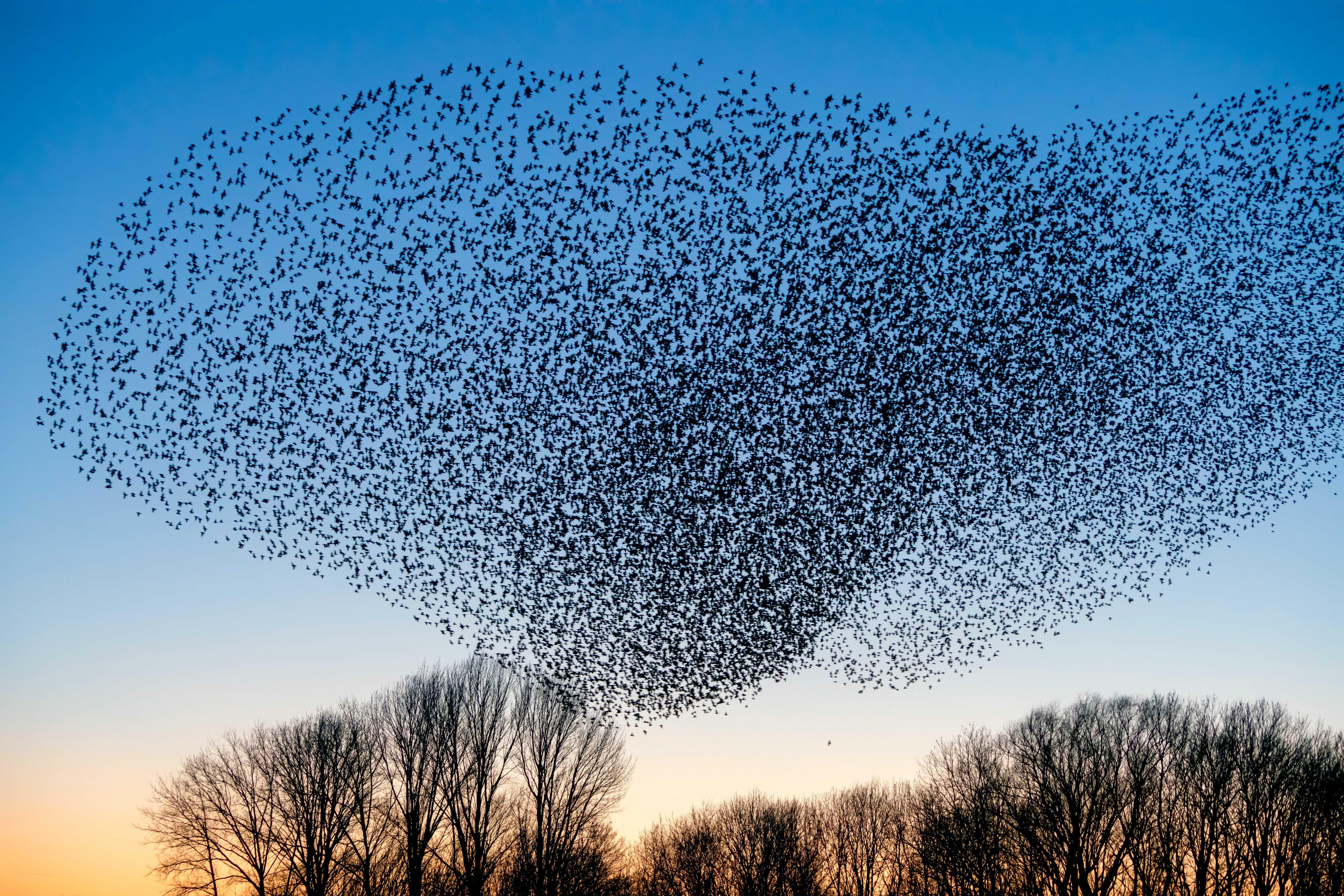
At first, I found this idea unsettling, but over time, I’ve come to see how much freedom it offers. When we let go of the belief that there is one fixed version of who we are supposed to be, we gain more agency over how we see ourselves and how we move through the world.
Within this ever-shifting sense of identity, I do believe we all have access to what I call our highest self—the fullest expression of who we are when we’re aligned with our deepest values and truest intentions. This is the part of us that acts from wisdom and compassion rather than fear or external pressure . . . and it feels like the world could use more of this energy right now.
Your highest self isn’t a perfect or flawless version of you. It’s the part of you that seeks growth, understanding, and connection. It’s the aspect of yourself that strives to live with integrity, kindness, and awareness—both for your own well-being and for the greater good.
As you begin to define the elements of your highest self, it can be helpful to contrast it with the ego. Ego often behaves like an observer, concerned with how others perceive you, while your highest self operates from a place of authenticity, unconcerned with external opinions.
For example, if you feel compelled to wake up at 4:30 in the morning and run five miles, consider the underlying motivation. Are you driven by a desire for external validation—admiration for your hustle or your six-pack? If so, that’s probably your ego talking. But if your motivation stems from a genuine desire for health and longevity so you can enjoy more time with the people you love, that may be more aligned with your highest self.
Motivations driven by ego and highest self often coexist. Ego is not inherently negative—its protective instincts have likely served you well. But for the purposes of crafting a meaningful ritual practice, it’s important to connect with a source of inspiration that is deep and true.
This is where core values come in.
Mining for Core Values
Core values are not aspirational traits or personality adjectives we should have. They are the qualities that already matter most to us—often hiding quietly in what we love, what frustrates us, and what we instinctively protect.
This exercise is inspired by You Need a Manifesto, a design-based approach to uncovering values that may not be immediately obvious. Rather than asking you to select values from a list right away, it begins with lived experience.
Set aside fifteen to twenty minutes of uninterrupted time. Find a quiet place and something to write with. Try not to overthink anything.
Start by writing down one activity you genuinely love—something you choose freely, not something you feel obligated to do. Describe why you love it in detail. What moments do you savor? What makes time disappear? What feels essential or non-negotiable about it?
Next, use metaphor to explore the activity more deeply. Complete a few versions of this sentence: This activity is like _________ because ________.
Some metaphors will feel forced— that’s ok, still jot them down. Others may surprise you— stay with it, even if it doesn’t fully make sense yet. Metaphor is so powerful because it helps bypass the analytical mind and allows intuition to surface.
When you’re done, reread what you’ve written and underline or circle words and phrases that feel charged or alive—emotional tones, qualities, or needs that stand out.
Finally, using the values worksheet below, look for values that correspond to the words you highlighted. Let yourself narrow your list to five to ten core values—or fewer, if that feels right. Focus on what feels true rather than impressive.
Before finalizing your list, pause and ask yourself: Do these values reflect who I am when I’m at my best—not my busiest or most productive, but my most aligned?
Then complete these sentences:
My core values are . . .
I currently bring them to life by . . .
I aspire to bring them to life by . . .
Note: This work is designed to be expansive and inclusive, offering tools that anyone can adapt to their own life. That said, for those who already have a spiritual or religious practice, ritual design can serve as an opportunity to reconnect with, deepen, or refine traditions that already hold meaning for you. Spirituality and religion have long offered pathways for understanding the self and connecting to something greater, and they remain a profound source of inspiration for many people.
From Values to Ritual Guiding Principles
Now that you’ve connected with your highest self and identified some core values, it’s time to shape these insights into guiding principles so that your ritual practice can be infused with meaning specific to you.
An ideal ritual practice, and one that you’ll find most rewarding and powerful, honors both your core values and your highest self. James Clear, author of Atomic Habits, wisely reminds us: “Every action you take is a vote for the type of person you wish to become.”
While that idea is inspiring, it can also feel overwhelming . . . but this is where I feel ritual becomes especially powerful. Rather than assigning meaning to every single action, ritual allows you to choose a few key actions each day and perform them with intention and reverence. By crafting guiding principles rooted in your values, and returning to them through ritual, you are casting a vote for a meaningful and fulfilling life every day, and hopefully inspiring others to do the same.
The following prompts may help you draft your guiding principles:
I am ____________________ and my ritual practice helps me live a life in service of ___________________________________________.
Because I value _________________________, I will ____________________.
My ritual practice will help me operate from a place of _________________ so that I can ______________.
If this feels too formulaic, don’t be afraid to change it up. Remember—rituals don’t need to make sense! Perhaps a poem, song lyric, prayer, or deeply held belief captures your guiding principles more naturally. The most effective ritual practice often serves to glorify a connection to something larger than ourselves.
And, don’t worry about getting this perfect— nothing here needs to be etched in stone. Write down whatever feels true today and keep it somewhere visible as a frequent reminder of your intentions.
As you move through the week, revisit your ritual inventory from Week One and notice where you are—and aren’t—living in alignment with these principles and consider that information to refine your practice.
In the weeks ahead, we’ll focus on crafting your daily ritual, building it block by meaningful block. But this week’s work—understanding yourself and the deeper purpose behind your practice—creates the foundation everything else will rest upon.
Your why is like a golden thread, weaving everyday moments into a pattern of meaning that connects you to what matters most.